How Business Management Dashboards Improve Decision-Making
Table of Contents
It’s Monday. You open your laptop, check the numbers… and sales are down.
Now you are digging through spreadsheets, emails, messages, asking people what is going on, but it’s all a bit messy, and you still do not have a straight answer.
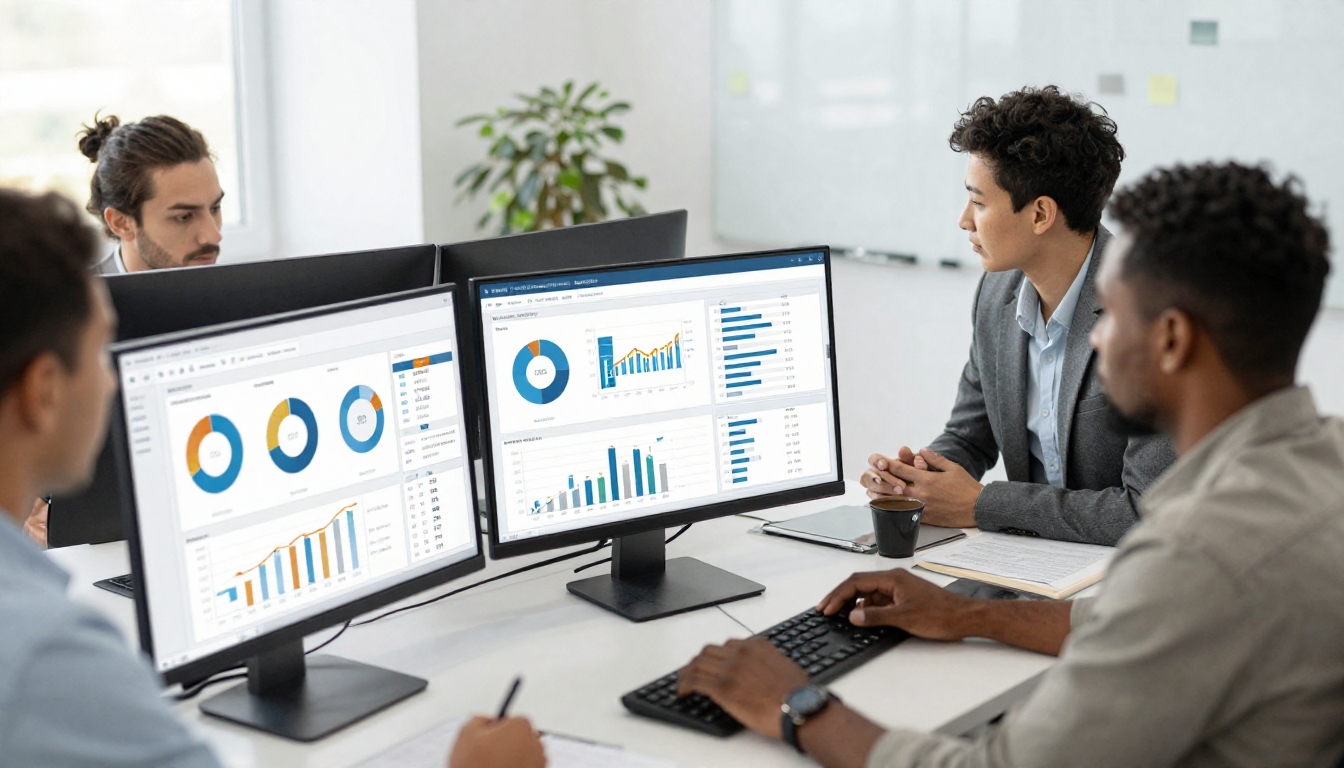
Now imagine this instead.
That is the difference business management dashboards solutions make.
They do not just organize your data–they help you understand your business in real time, so you can make decisions with confidence instead of guesswork.
What Are Business Management Dashboards Solutions?
Instead of jumping from spreadsheets to emails to random tools, imagine opening one screen and seeing everything you need.
That’s basically what a dashboard does – it puts your whole business in front of you, in a way that actually makes sense.
With business management dashboards solutions, you are not just collecting data. You are turning it into something meaningful and actionable.
Why SMBs Mostly Struggle With Decision-Making
Most small and medium businesses do not lack data; they lack clarity.
Data is often:
- Scattered across different tools
- Updated too late to act on
- Hard to interpret without technical knowledge
This is why reliable bookkeeping services for accurate financial tracking are crucial; they help feed clean data into your dashboards for better decision-making.
This creates delays in decision-making and increases the chances of making the wrong call.
And this isn’t just talk – businesses that actually use their data properly tend to do way better.
The real difference comes down to this: some businesses have data, others actually use it. And that gap? That’s usually where growth either happens… or doesn’t.
How Dashboards Improve Decision-Making in SMBs
Real-Time Visibility Changes Everything
Dashboards change one big thing: timing.
Instead of looking at outdated reports, you see what’s happening right now. A performance management dashboard shows you how every part of your business is performing in real time, from sales to operations to your team.
And that means you don’t react late, you act when it actually matters.
Focusing on the Right Metrics
A lot of businesses track way too much data… and end up understanding almost none of it.
That is where dashboards help; they cut through the noise and show you what actually matters.
A key metrics dashboard keeps your focus on the numbers that really drive growth, such as revenue, customer acquisition cost, and conversion rates.
So instead of feeling confused, you finally get a clear picture of what is working.
Turning Complex Data Into Simple Insights
Numbers alone don’t tell you much unless you understand them.
This is where data visualization for performance reporting and dashboards plays a crucial role. Visual elements like charts and graphs make it easier to spot trends, as well as identify patterns, and compare performance over time.
You do not need to be a data expert. The insights become clear at a glance.
Faster Decisions With Less Guesswork
Once your data is centralized and easy to understand, decisions just happen more quickly.
You no longer need to:
- Wait for the reports
- Cross-check multiple sources
- Second-guess your numbers
Everything you need is already in front of you.
This speed gives SMBs a major advantage, particularly in competitive markets where timing matters.
Aligning Teams Around the Same Data
Confusion is inevitable when different teams rely on different data sources.
Dashboards create a shared understanding across your organization.
Marketing, sales, and finance teams all work with the same insights, which improves coordination as well as reduces miscommunication. Everyone moves in the same direction because everyone sees the same picture.
A Quick Real-World Example
Here is a simple example: you run an online store.
No dashboard? You only see a revenue drop after the month ends, too late to do anything.
With a dashboard? You spot the drop in conversions within a day, find it’s a website tweak, and fix it immediately.
Timely insights like this turn delays into opportunities.
The Importance of Dashboard Analysis
Having a dashboard is just the starting point. The real magic happens when you actually use it.
Dashboard analysis is basically asking the right questions, not just staring at numbers. Like: Why did sales jump this week? What made customer engagement drop? Which channel is actually bringing in the best results?
Once you start looking at your data regularly, you stop just watching your business happen; you start steering it.
Choosing the Right Dashboard Solution
Not every dashboard is going to fit your business.
For SMBs that want to take things further, analytical business intelligence services can pull your data together and make your dashboards smarter.
The best business dashboard software is the one that actually works for how your business runs. It should be simple enough to use every day, flexible enough to grow with you, and powerful enough to give insights that actually matter.
Most importantly, it should help you focus on decisions, not just data.
Common Mistakes to Avoid
It is easy to fall into certain traps, even with the right tools.
One common mistake is trying to track everything at once. Too much information can be just as harmful as too little. Another issue is ignoring the dashboard after setting it up. Consistency is the key; your dashboard should become part of your routine.
And finally, some businesses focus on metrics that just “look good” but don’t really move the needle. The trick is to prioritize the data that actually drives growth.
Getting Started Without Overcomplicating It
You don’t need a fancy setup to get started with dashboards.
Start by identifying your most important business goals. Then, choose a few key metrics that reflect those goals. Build a simple dashboard around them and review it regularly.
As your business grows, you can expand and refine your dashboard. The goal is to start simple and stay consistent.
Why Dashboards Are Essential for Modern SMBs
The way businesses operate today has changed.
Decisions need to be faster. Competition is stronger. Customers expect better experiences.
Relying on outdated methods puts you at a disadvantage.
Dashboards give you the ability to stay informed, act quickly, and make decisions with confidence. They turn data into a daily tool instead of a monthly report.
How SMB Services Support Smarter Decision-Making
At SMB Services, the focus is not just on building dashboards but on helping businesses actually use them to make better decisions.
From identifying the right metrics to creating dashboards that are easy to understand, the goal is to simplify data so it works for you–not against you.
Final Thoughts: It’s Time to Take Control of Your Data
If you have been relying on scattered reports or gut feeling, it is time to rethink your approach.
You do not need more data…you need better visibility.
Start small, as well as focus on what matters, and build a system that helps you make decisions faster and smarter.
Check out SMB Services’ main offerings to see how your business can get real-time insights. If you are ready to go from confusion to clarity, now’s the perfect time to explore the right dashboard solution.
At the end of the day, better decisions don’t come from working harder; they come from having better insights.
Frequently Asked Questions
1. What are business management dashboards solutions?
Business management dashboards solutions are tools that bring all your business data into one place, helping you track performance, monitor key metrics, and make better decisions in real time.
2. How do dashboards improve decision-making for SMBs?
Dashboards give you real-time insights into your business so you can quickly spot problems, track progress, and make informed decisions without relying on guesswork or outdated reports.
3. What is a key metrics dashboard?
A key metrics dashboard focuses on the most important numbers in your business, such as revenue, costs, and conversions, so you can easily understand what’s driving your growth.
4. Do small businesses really need dashboard solutions?
Yes, even small businesses benefit from dashboards. They simplify data, save time, and help owners make faster, smarter decisions without needing advanced technical skills.
5. What should I look for in a business dashboard solution?
Look for a dashboard that is easy to use, shows real-time data, integrates with your tools, and focuses on the metrics that matter most to your business goals.