How Poor Bookkeeping Can Cost Your Business More Than You Think
Table of Contents
At first, poor bookkeeping is not always a serious business issue.
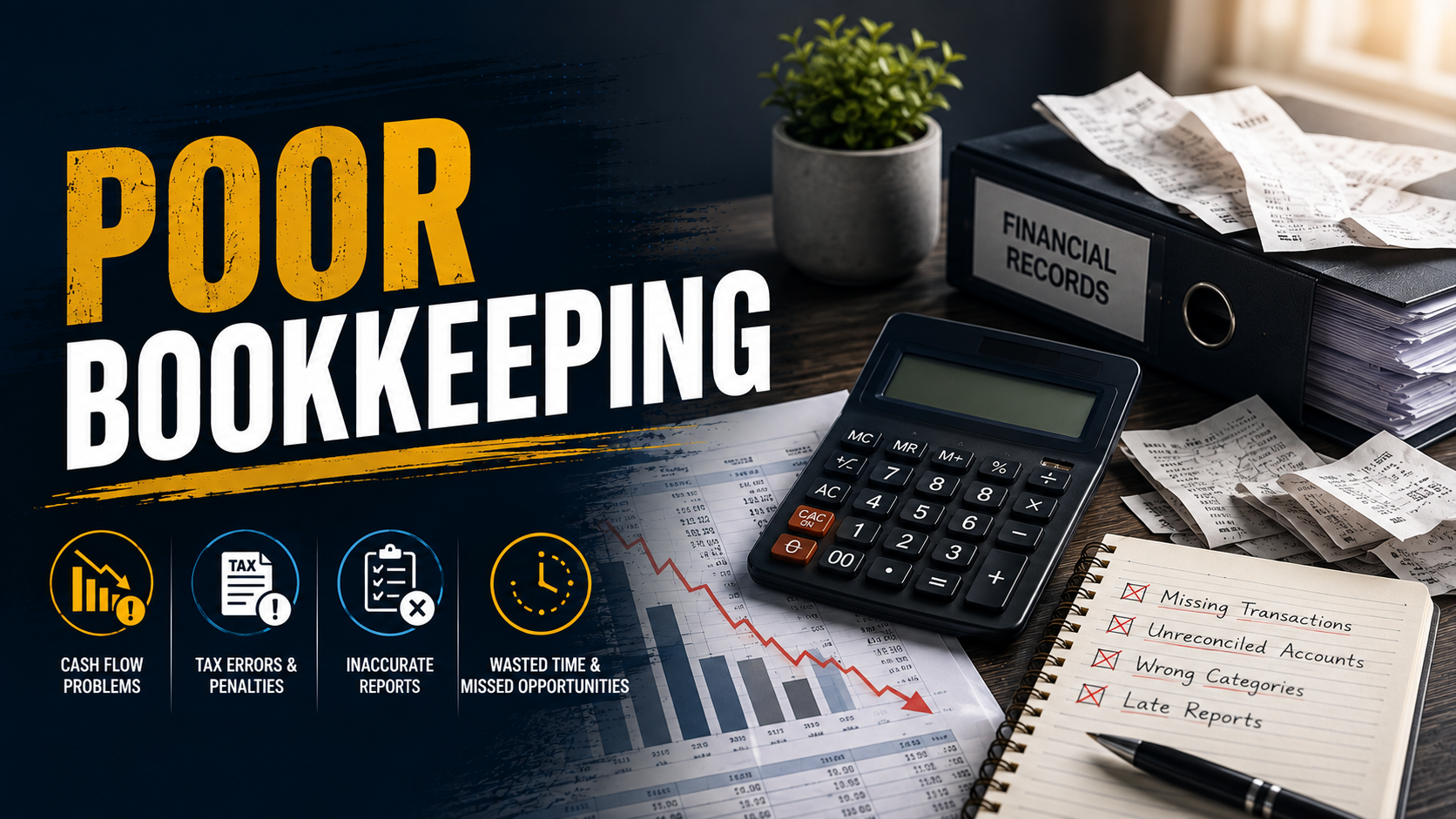
Maybe a few transactions are missing. A bank account has not been reconciled for a couple of months. Some expenses are in the wrong category. You plan to clean everything up later.
The issue is that the small bookkeeping issues rarely stay small.
The repercussions of having incorrect or out-of-date financial records can extend into your cash flow, taxes, financial reporting, and business decisions. You may also spend more time fixing old records than you would have spent keeping them accurate.
So what does poor bookkeeping really cost a business?
More than just a few accounting errors.
What Is Poor Bookkeeping?
Poor bookkeeping involves having incomplete, inaccurate, outdated, or poorly organized business finances.
This can occur due to incorrect transaction entry, failure to reconcile accounts, misclassified expenses, invoices not being tracked, or bookkeeping being left until the end of the month, quarter, or year.
The real problem is not one incorrect entry. It is how repeated errors affect the financial information you use to run your business.
Common Signs of Poor Bookkeeping
Your bookkeeping may need attention if:
- Your books are consistently behind.
- Bank and credit card accounts are not reconciled regularly.
- You find missing or duplicate transactions.
- Personal and business expenses are mixed together.
- Your financial reports do not seem accurate.
- Tax preparation needs last-minute cleanup.
- You are unsure how much customers still owe you.
- You cannot quickly tell how profitable the business is.
Your bookkeeping may need more than a quick cleanup if several of these sound familiar.
Why Small Bookkeeping Errors Become Bigger Problems
Think of bookkeeping as the foundation of your financial information.
One incorrectly recorded expense may not seem important. However, when similar errors continue month after month, your financial reports can start showing a very different picture of the business.
That can impact tax preparation, cash flow planning, budgeting, forecasting, and the decisions you make based on those numbers.
The Hidden Costs of Poor Bookkeeping
The cost of poor bookkeeping goes beyond paying someone to fix the books…
You can lose time, miss opportunities, make poor financial decisions, and create unnecessary tax or compliance problems.
Poor Cash Flow Visibility
You may not know your current cash position which customers still owe you, or which bills are coming due if your books are behind.
That means you are making cash decisions with incomplete information. You may delay a necessary purchase or take on a new expense without seeing the full picture.
When you have accurate bookkeeping, you will have a better understanding of your money.
Missed Tax Deductions and Costly Tax Errors
Tax preparation can be more difficult due to poor bookkeeping.
Missing, miscategorized, or poorly documented expenses can make it difficult to identify legitimate deductions and prepare accurate tax records. Incorrect income or expense records can also lead to inaccurate filings and extra work to correct them.
Good bookkeeping does not replace professional tax advice, although it gives your tax professional cleaner information to work with.
Inaccurate Financial Statements
Your profit and loss statement and balance sheet are only as useful as the information behind them.
Missing transactions or unreconciled accounts can make it challenging to see what your business owns, owes, earns, and spends.
A profitable business may look weaker than it is; on the other hand, an unprofitable area may appear healthier than it really is. Both can lead to poor decisions.
Poor Business Decisions
You use financial information to decide how much to spend, when to hire, what to price, which services to expand, and how much cash to keep available.
If those numbers are wrong, your decisions are based on incomplete information.
You do not need complicated financial models to run a business well. You do need reliable numbers.
Lost Time and Productivity
Bookkeeping problems take time to fix.
Someone has to find missing transactions, check receipts, investigate balances, reconcile accounts, correct entries, and rebuild reports.
For a business owner, hours spent fixing old transactions are hours taken away from customers, sales, employees, and growth.
Payroll and Vendor Payment Problems
Poor financial records can also affect daily operations.
Inaccurate accounts payable records can cause the following: missed vendor bills or duplicate payments. Poorly maintained payroll records can make corrections more difficult.
Vendors expect accurate, timely payments, and employees expect their payroll information to be correct.
Problems With Loans, Audits, or Due Diligence
Clean financial records become especially important when you need to prove your business’s financial position.
Lenders, investors, buyers, auditors, and other financial professionals may require reliable financial information. If your books are incomplete, you may need to clean them up before providing the records, slowing down an important process.
Quick Example: How One Bookkeeping Problem Can Grow
Suppose a service business has $15000 in customer invoices that were not recorded correctly.
The owner now sees $15000 less revenue than the business actually earned. That can make cash flow look tighter, profitability look weaker, and spending decisions harder to make.
The owner may delay a needed hire, cut spending the business can afford, or miss an opportunity to invest in growth.
The original problem was a bookkeeping error. The financial impact came from making business decisions with incomplete numbers.
How Poor Bookkeeping Affects Business Growth
As your business grows, so does its financial activity. More customers mean more invoices, more employees mean more payroll, and more vendors mean more bills to track…
If your bookkeeping does not keep up, it becomes difficult to see what is really happening inside the business.
You Lose Visibility Into Profitability
Revenue alone does not show how well your business is performing. You also need accurate information on expenses, margins, receivables, and liabilities.
When your records are inaccurate, you may not know which areas of the business are actually profitable.
Budgeting and Forecasting Become Less Reliable
The accuracy of financial data is the basis of budgets and forecasts.
If your books are incomplete, you may underestimate expenses, overestimate available cash, or set growth targets without a clear financial baseline.
It Becomes Harder to Know When You Can Afford to Grow
Hiring employees, buying equipment, launching a service, or opening another location all need careful financial planning.
Accurate books show you what the business can realistically afford before you commit to a major expense.
Financial Problems Are Discovered Too Late
Delayed bookkeeping can hide issues such as rising expenses, overdue invoices, falling margins, or cash flow pressure.
By reviewing current financial records, you can be alerted to these issues sooner and can take steps to address them before they get more costly.
7 Common Bookkeeping Mistakes That Cost Businesses Money
Some bookkeeping problems appear again and again…
1. Mixing Personal and Business Expenses
Using business accounts for personal purchases makes your records harder to understand and it can also complicate expense tracking and tax preparation.
Keep business and personal spending separate from the start.
2. Skipping Bank Reconciliations
Your accounting records should match your actual bank activity.
Frequent reconciliation can detect missing transactions, duplicate entries, incorrect amounts and other discrepancies.
3. Falling Behind on Bookkeeping
When you try to reconstruct several months of transactions at once, bookkeeping becomes harder.
It becomes easier to find and fix errors with regular updates.
4. Recording Transactions Incorrectly
An incorrect amount or account classification may seem harmless.
If the mistakes are repeated, they can affect the accuracy of your financial records and make it more difficult to analyze the business.
5. Misclassifying Expenses
If you categorize expenses incorrectly, it can impact reports and make it difficult to see where your money is going.
6. Ignoring Accounts Receivable
A sale is not the same thing as cash in the bank.
If you are not tracking outstanding invoices properly, you may have strong sales, although still face cash flow problems.
7. Waiting Until Tax Season to Clean Up the Books
Tax season should not be the first time someone takes a serious look at your financial records.
Year-round bookkeeping gives you cleaner information and makes tax preparation easier.
How to Fix Poor Bookkeeping
The good news is that poor bookkeeping can be fixed. Begin by correcting old errors and putting a process in place to prevent new ones.
Bring Your Books Up to Date
Gather bank statements, invoices, receipts, bills, and payroll records. Then work through missing periods systematically rather than trying to fix everything at once.
Reconcile Your Accounts
Match your accounting records with your actual bank and credit card activity. Regular reconciliation helps catch missing, duplicate, or incorrect transactions.
Separate Business and Personal Transactions
Keep business and your personal spending separate. Dedicated business accounts make your records easier to maintain and review.
Review Your Chart of Accounts
Make sure your categories match how your business operates. A clean chart of accounts makes it easier to understand revenue, expenses, and overall performance.
Establish a Monthly Bookkeeping Routine
Keep your books updated throughout the year. Regular transaction recording, reconciliations, receivables and payables reviews, and financial reporting can prevent problems from piling up.
Use Accounting Software and Automation Where Appropriate
Accounting software can reduce manual work but it does not guarantee accurate bookkeeping. Proper setup, categorization, reconciliation, and regular review still matter.
Get Professional Help When Needed
If your records are months behind, transactions are complicated, or you are unsure about your financial reports, professional bookkeeping support can save time and help get your books back on track.
When Should You Outsource Your Bookkeeping?
Outsourcing can make sense when bookkeeping takes too much of your time or becomes difficult to manage.
Consider professional bookkeeping services if:
- Your books are consistently behind.
- You spend too much time fixing bookkeeping issues.
- Your business has grown and transactions have increased.
- Your financial reports are unreliable.
- Tax preparation requires major cleanup.
- You need regular reconciliations and financial reporting.
- You want your team focused on higher-value work.
Professional bookkeeping is about more than recording transactions. The objective is to keep your financial information accurate, current, and ready to use.
How Accurate Bookkeeping Helps Your Business
Good bookkeeping gives you a clearer view of your business finances.
You can track cash flow, monitor expenses, see what customers owe you, review profitability, and spot financial problems earlier. It also gives your accountant or tax professional accurate information to work with.
As your business grows, broader finance and accounting support can also help with financial reporting, budgeting, forecasting, and financial insights alongside day-to-day bookkeeping.
Frequently Asked Questions About Poor Bookkeeping
What happens if a business has poor bookkeeping?
Poor bookkeeping can cause inaccurate financial reports, cash flow problems, tax errors, wasted time, and poor business decisions.
Can poor bookkeeping affect cash flow?
Yes. Inaccurate records can make it harder to know how much cash you have, what you owe, and what customers still owe you.
Can bookkeeping mistakes cause tax problems?
They can. Missing or incorrectly categorized transactions can make tax preparation harder and may lead to inaccurate reporting.
What are the most common bookkeeping mistakes?
Common mistakes include missing transactions, skipped reconciliations, mixed personal and business expenses, incorrect categorization, and delayed bookkeeping.
How often should a business update its books?
Businesses should update their books regularly. Monthly bookkeeping is a practical baseline for keeping records current and reviewing financial performance.
When should a business hire a bookkeeper?
Consider hiring a bookkeeper when your records fall behind, transactions become harder to manage, or bookkeeping takes time away from running the business.
Is outsourcing bookkeeping worth it for a growing business?
It can be. Outsourcing gives growing businesses professional bookkeeping support without requiring the owner to manage every transaction and reconciliation.
Your Books Are More Than Records
Bookkeeping can be done in the background, although it affects how you run your business.
Your books tell you where your money is going, what customers owe you, what you owe others, and how the business is performing. Even basic financial decisions become more difficult when those numbers are incorrect.
You do not need perfect books. You must have up-to-date, accurate, and organised financial records.
If keeping your books up to date has become difficult, professional bookkeeping services can handle the daily recordkeeping and give you clearer financial information to work with.
The sooner you fix poor bookkeeping, the easier it will be to keep a minor accounting problem from becoming an expensive business problem.